Packing for a Short, Changeable Day Ride
Packing for a short, changeable day ride starts with time, route familiarity and likely stops, helping you carry useful everyday items without packing for every possibility.
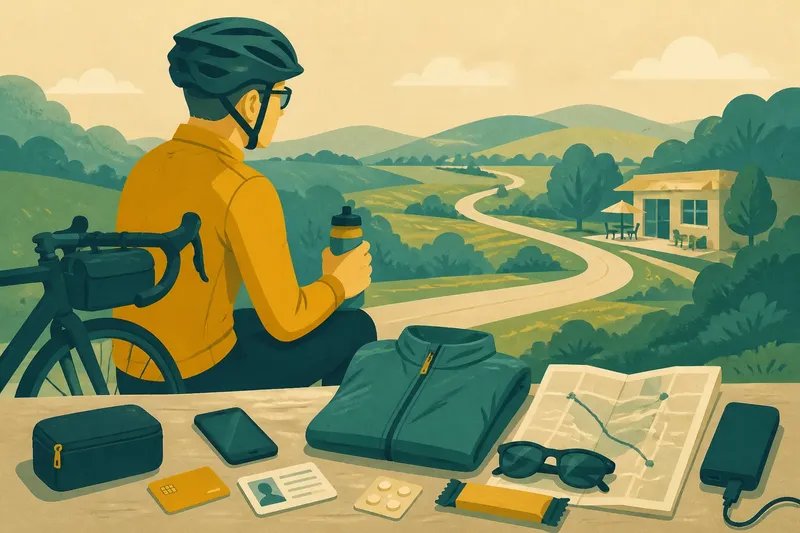
What should you pack for a short, changeable day ride when you do not want to plan around a forecast? Start with the ride itself: how long you expect to be out, how well you know the route and where you might stop. Packing for a short, changeable day ride is less about predicting every problem than choosing a few useful items for the time and places involved.
This method keeps the decision grounded in ordinary needs. A familiar loop with a café stop calls for a different bag from an unfamiliar route that passes few places to pause, even if both rides take a similar part of the day.
Let the ride, not the bag, set the packing plan
Begin by sketching the outing in plain terms. Note the expected riding time, the route’s familiar and unfamiliar sections, and any planned stops. Include the journey to and from the start if it affects what you need to carry. You do not need a detailed itinerary; a few notes on your phone or a line on paper will do.
Then divide possible items into three groups:
- Needed throughout: everyday essentials such as a phone, identification, payment method and any personal medication you normally carry.
- Useful for comfort: a water bottle, a snack, an extra layer or sunglasses, depending on the ride and your preferences.
- Useful only if circumstances change: items that make sense because of a particular route, stop or personal need, rather than because they might theoretically come in handy.
The last group is where restraint matters. Packing is not a contest to cover every imaginable scenario. It is a decision about what you would reasonably want access to during this particular outing.
Use duration to judge what you may need between stops
Duration means the time you expect to be away, not just the time your wheels are turning. A short ride can include a long pause, and an apparently simple outing can stretch if you stop to meet someone, visit a shop or take a wrong turn. Think about how long you might go without an easy place to buy a drink or sit down.
For a brief, familiar ride with places to stop, you may prefer a bottle and a small personal essentials pouch. For a longer outing, a snack or an extra layer may be more useful because you will spend more time away from home and may want to pause somewhere without facilities. These are not fixed rules. They are prompts to consider what the outing asks of you.
Say you are planning a ride that usually takes a little while and includes a stop at a café you know. You might carry your phone, payment card, water and a light layer, then leave a larger food supply at home. If you instead extend the route beyond the café, the change in time between convenient stops could make a snack worth adding. The route change, rather than a general packing rule, explains the choice.
Route familiarity changes how much you rely on places along the way
A familiar route gives you useful knowledge: where shops are, which paths connect, and where you can pause. That knowledge can reduce the need to carry items you can reasonably obtain or leave behind. It does not mean the route is risk-free; it simply makes some decisions easier because you know what is available.
On an unfamiliar route, look at a map before leaving and notice towns, parks, cafés or other places where a stop might be possible. Check whether your phone is likely to be useful for navigation and whether you can access the route information you need. If you expect to rely on a mobile map, consider carrying a charged phone and a small power bank if that suits your device and outing.
Route familiarity also affects what “short” means in practice. A short distance through places you know may feel straightforward, while a similar distance across an area with few obvious stops may call for more independence. Think in terms of access and options, not distance alone.
Likely stops help distinguish useful items from spare weight
Ask what you expect to do when you stop. A café visit may make a payment card and a small bag for personal items useful. A park pause might make a snack and a layer more relevant. If you plan to meet a friend, a phone with enough charge to contact them may matter more than an item you would carry only out of habit.
Consider the stop’s practical setting, too. If you will leave the bicycle while buying something, keep valuables easy to remove and take with you. A small handlebar bag, top-tube bag or zipped pocket can make access simple, but the right choice depends on the bicycle and what you already own. Do not pack a new bag just to solve a problem that your normal pockets already handle.
When you are unsure whether an item earns its place, ask two questions: could I use it during this ride, and would a likely stop provide an alternative? If the answer to both is no, it may be an unnecessary addition. If the item addresses a personal need, keep it even if it is not useful to everyone else.
Choose clothing for comfort without trying to predict the day
Changeable conditions make clothing choices feel uncertain, but the same route-based thinking still helps. Consider whether you will be riding steadily, pausing for a while or spending time somewhere exposed. A light layer that fits in a pocket can be useful for a cool pause or a shift in comfort. Sunglasses or a cap may suit your preferences and the route, while a compact waterproof layer is a personal choice for someone who would rather carry one than be caught out.
Use garments you already know how to wear comfortably on the bicycle. A layer that is awkward to stow or restricts movement may be less useful than a simpler option. If you are unsure, choose familiar clothing and avoid making the outing depend on a new garment behaving exactly as expected.
For clothing and personal equipment, follow the relevant care instructions and any requirements that apply where you ride. Keep the decision about comfort separate from safety-critical equipment; a packing plan for a day ride is not a substitute for suitable lights or other equipment required by local rules.
Which questions help settle a day-ride packing decision?
Should I pack food for a short ride?
Think about how long you will be out and whether food is available at the stops you expect to make. A familiar café route may not call for a snack, while an outing with few convenient stops may make one a sensible personal choice.
Do I need a power bank on a day ride?
It depends on how much you expect to use your phone and whether you rely on it for directions or contact. If the route is familiar and your phone will stay mostly unused, you may prefer to leave the power bank at home; if navigation is central, carrying one may suit you.
How much clothing should I carry?
Choose for the ride’s likely pauses and your own comfort, rather than trying to bring an outfit for every possible condition. A familiar, packable layer can cover a change in comfort without taking the place of clothing you already know works for cycling.
What should I do if the route changes?
Reconsider the plan using the same three questions: how much longer will you be out, how familiar is the added section, and what places will be available to stop? Add an item only when the change creates a specific need you can identify.
Make one final check against the ride you actually intend to take
Before leaving, look at your route notes and the items you have chosen. Confirm that essentials are with you, that your water and any personal medication are covered, and that the things you may need during a stop are easy to reach. Remove anything that has no clear role on this outing, while keeping personal necessities that may not fit a general rule.
Keep the plan flexible. If you decide to extend the ride, stop somewhere unexpected or change the route, pause and reassess what the new situation calls for. Packing for a short, changeable day ride works best when the bag reflects the outing you are taking now, not every ride you might take someday.